Rear Guard: The Complete Guide to Keeping Back-Seat Passengers Happy on Long UK Drives
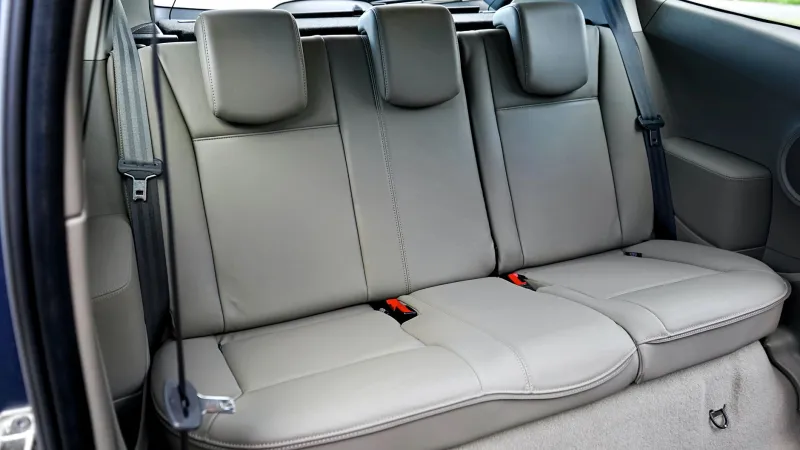
Anyone who's driven the length of Britain with a full car knows that the limiting factor is rarely the driver. It's the passengers. Specifically, it's the moment somewhere around junction 14 of the M6 when someone's phone dies, someone else's neck hurts, a third person can't find their snacks, and the general atmosphere in the back seats begins to curdle.
The front of a modern car is typically well thought-out — cupholders, charging points, adjustable everything, climate control. The back is often an afterthought: a bench, a middle armrest if you're lucky, and a vague hope that everyone will just get on with it. For short journeys, that's fine. For a five-hour drive to the Scottish Highlands or a summer holiday run down to Cornwall, it really isn't.
The good news is that sorting the back seats doesn't require a new car. It requires a bit of thought and the right accessories — most of which are compact, affordable, and make a genuinely noticeable difference.
Start with Comfort: Neck Pillows and Lumbar Support
Adults are terrible at admitting when they're uncomfortable. They'll sit in an awkward position for three hours rather than say anything, then spend the next two days with a stiff neck blaming the journey rather than the lack of support.
A decent travel pillow is worth its weight in goodwill. The U-shaped memory foam options are far superior to the inflatable ones — they actually hold the head in a neutral position rather than letting it loll forward. Compact enough to clip to a bag or compress into a small case, they're one of the easiest wins in passenger comfort.
For longer journeys, lumbar support cushions make a real difference too. Most car seats don't have the lower back support that adults actually need over several hours, and a slim foam or inflatable lumbar cushion addresses that without taking up meaningful space.
If you've got young children in car seats, check that any pillow or headrest insert is compatible with the seat's harness system and doesn't interfere with the restraint.
Headrest Mounts: Entertainment That Doesn't End in Arguments
For families with children, a headrest-mounted tablet holder is probably the single highest-impact purchase on this list. Clamped to the back of the front headrests, they hold a tablet at a comfortable viewing angle for rear passengers — no one holding a screen above their head for an hour, no arguments about who gets to hold the iPad.
Most universal mounts accommodate tablets from 7 to 11 inches and fold flat when not in use. Look for ones with a 360-degree rotating cradle so the screen can be adjusted for different passengers and reclined seats.
For older passengers or adults, a lap tray or cushion desk is underrated. It gives them a stable surface for a laptop, book, snacks, or whatever — and it takes up no space in the car when it's not in use.
The Charging Problem
Every long journey eventually becomes a negotiation over charging cables. Someone's on 12%, someone else forgot their cable, and your single rear USB port is now the subject of a diplomatic incident.
A multi-port USB hub that plugs into the rear power socket (if your car has one) or runs off a cable from the front is a simple solution. Look for one that includes both USB-A and USB-C ports — newer devices increasingly use C, and being caught out by the wrong connector is a misery that's entirely avoidable.
For cars without rear USB ports, a 12V splitter adapter in the front that runs a cable to the back is a workable alternative. Magnetic cable organisers or cable clips along the door sill keep things tidy and stop cables trailing across the floor.
If you're doing regular long trips, a portable power bank with a high capacity (20,000mAh or above) can serve as a shared charging hub for the back seats without needing any wiring at all.
Seat-Back Organisers: The Unsung Hero
A seat-back organiser — the kind that straps to the back of the front headrests — is one of those things that seems slightly unnecessary until you have one, and then you can't imagine being without it.
They create instant, accessible storage for rear passengers: pockets for tablets, phones, bottles, wipes, snacks, books, crayons, sick bags (just being realistic), and whatever else accumulates over a long journey. Everything is within reach without rooting around in a bag on the floor, and the floor stays clear.
For families, look for organisers with a wipeable interior surface — spills happen, and being able to wipe a pocket clean rather than having it absorb something sticky is a genuine quality-of-life improvement.
Keeping Kids Occupied Without Losing Your Mind
Screen time is a perfectly legitimate tool on a long drive — anyone who tells you otherwise has either never driven with children or is being dishonest about their own childhood. But screens aren't always the answer, and having some alternatives reduces the dependency on battery life.
Travel activity packs — colouring books, magnetic drawing boards, small puzzles, sticker books — take up almost no space and can keep younger children engaged for surprising stretches of time. A small bag dedicated to travel activities, refreshed with new items before each big trip, becomes something to look forward to rather than a last resort.
Headphones are essential for anyone using a screen or listening to music. Over-ear headphones are more comfortable for longer periods than in-ear options, and volume-limiting children's headphones are worth the investment for younger passengers.
Snacks, Drinks, and the Organisation Thereof
Food management in the back of a car is a civilisational challenge. Things get warm, things spill, wrappers accumulate, and someone always wants something at the moment you're merging onto a roundabout.
A small, insulated cool bag that sits on the floor or in the footwell keeps drinks and perishable snacks at a reasonable temperature without needing a full-size cool box. Pair it with a small lidded snack pot for each passenger — one person's portion, contained, reducing the need for anyone to rummage in a shared bag.
A compact rubbish bag or small bin that hooks over a headrest or clips to a door handle is worth its minimal footprint. It sounds trivial, but having a dedicated place for wrappers and tissues means the back of the car doesn't look like a service station bin by the time you arrive.
The Overall Approach
The theme running through all of this is accessibility and containment. Passengers are more comfortable when things are easy to reach, less frustrated when devices stay charged, and more settled when there's a clear place for everything. None of these accessories are complicated or expensive — but together they shift the atmosphere in the back of the car from chaotic to genuinely comfortable.
Long drives across Britain can be brilliant. The landscapes are worth the hours, and there's something genuinely good about time in the car together. With the right setup in the back, you might even hear the occasional 'are we nearly there yet' replaced by a contented silence. Almost.