Loaded Wrong, Driving Danger: The Science Behind Packing Your Car Properly
Here's something most drivers never think about: the moment you load your car, you've changed how it drives. Not dramatically, perhaps — but meaningfully. Shove a couple of heavy bags in the wrong place and you've subtly shifted the vehicle's centre of gravity, altered its braking behaviour, and potentially set yourself up for a nasty surprise if you have to swerve or stop hard.
Whether you're heading off on a long weekend in the Cairngorms, loading up for a family trip down to Cornwall, or just doing a big supermarket run, the physics of how you pack your vehicle are always at work. Let's break down what's actually happening — and what you can do about it.
Why Weight Distribution Isn't Just a Lorry Driver's Problem
Van and HGV drivers are trained extensively on payload and weight distribution. Car drivers? Almost never. But the principles apply just as much to your hatchback or SUV as they do to a transit van.
Every car is engineered with a specific weight balance in mind — usually a rough front-to-rear split that the manufacturer has dialled in for optimal handling and braking. When you start piling weight into the boot, you're shifting that balance rearward. In small amounts, that's fine. In larger amounts, it starts to affect things noticeably.
A heavily rear-loaded car can feel 'floaty' at the front, especially at motorway speeds. Steering becomes lighter and less precise. In a rear-wheel-drive vehicle, oversteer risk increases. In a front-wheel-drive car — which is the majority of everyday UK motors — the front wheels lose some of their grip because there's less weight over them.
The result? Longer stopping distances, reduced steering response, and a car that doesn't behave quite the way you expect when things go wrong.
The Boot Floor Is Not a Free-for-All
Most people treat the boot like a skip. Heaviest stuff first because it fits, lighter things stacked on top, bags wedged wherever they'll go. It works in the sense that everything fits. But it's not ideal.
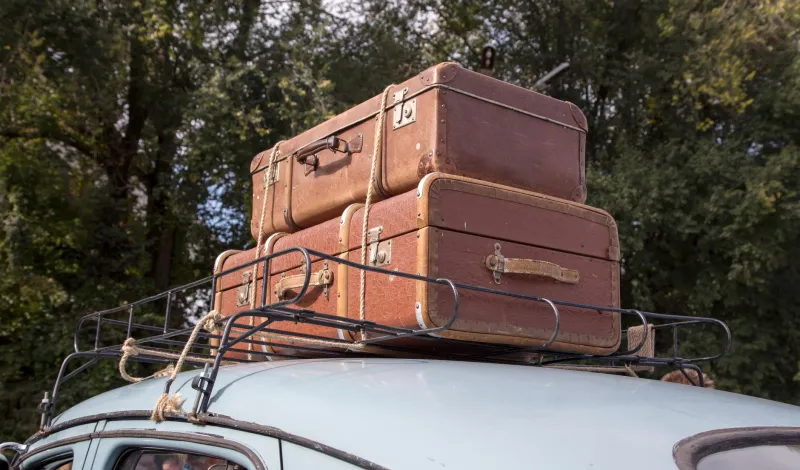
The golden rule is to keep heavy items low and as far forward in the boot as possible — ideally pushed up against the rear seat backs. This keeps the weight lower in the vehicle (lowering the centre of gravity) and closer to the car's natural balance point. Roof boxes and roof racks are brilliant for extra capacity, but they raise the centre of gravity significantly, which is why cars feel more top-heavy and prone to body roll when they're loaded up top.
For longer trips, think of your boot in layers and zones:
- Zone 1 (forward, against the seats): Heaviest items — camping gear, tool kits, water containers, cool boxes
- Zone 2 (middle): Medium-weight bags, clothing, soft luggage
- Zone 3 (nearest the tailgate): Light, easy-access items — snacks, waterproofs, things you'll need at a stop
This isn't just about physics. It's also about practicality. Nobody wants to unpack the entire boot at a motorway services just to get to a bag of crisps.
What Actually Happens When You Brake Hard
Emergency braking is where poor loading really shows its teeth. When you hit the anchors, everything in your car that isn't secured wants to keep moving forward — including you, which is why seatbelts exist. But your luggage? That's a different story.
An unsecured bag or box in the boot can become a projectile in a serious stop. A heavy cool box sliding forward and hitting the back of a rear seat — or worse, a rear-seat passenger — is a genuine injury risk. It sounds dramatic, but the physics are real: a 10kg bag in a 30mph emergency stop exerts the equivalent of several times its weight in forward force.
Cargo nets, boot organisers, and securing straps aren't just for keeping things tidy. They're a basic safety measure. If you're regularly carrying loose items in the boot or back seats, a proper cargo net or a boot divider with securing points is one of the more worthwhile bits of kit you can invest in.
For items on the rear seats, always use the seatbelts to secure bags where possible, or use a dedicated cargo barrier if your vehicle supports one.
The Order You Pack In Actually Matters
This one catches people off guard. It's not just about where things sit when you're done — it's about the sequence you load them in.
If you put a large, flat item in first (say, a folded groundsheet or a board game box), it creates a natural platform that other items will slide on top of during loading. That's fine until you start moving, at which point everything on that slippery base starts shifting. Textured bags and soft luggage grip each other much better than hard cases and flat surfaces.
Also consider what you'll need first at your destination. If you're pitching a tent in the dark, your tent and torch should be accessible without dismantling everything else. Packing in reverse order of need — last things in, first things used — saves an enormous amount of faff.
Roof Boxes and Roof Racks: Handle With Extra Care
Roof storage is a game-changer for longer trips, giving you the space to keep the interior comfortable and the boot manageable. But the trade-offs are real.
A loaded roof box raises your vehicle's centre of gravity, making it more susceptible to body roll in corners. The higher the load and the heavier it is, the more pronounced this effect. UK speed limits and motorway driving generally keep this manageable, but it's worth slowing down through roundabouts and tighter bends when you're running a full roof box.
Also — and this one genuinely trips people up — remember to account for the increased vehicle height. Car parks, drive-throughs, low bridges. A roof box adds anywhere from 20 to 40cm to your vehicle's height. It sounds obvious, but roof boxes get clipped on multi-storey ramps every single year.
Fuel Efficiency and the Weight You're Carrying
Beyond handling and safety, there's a simple financial reason to think about what you're carrying. Weight costs fuel. Every extra 50kg you're hauling around increases your fuel consumption — estimates vary, but even a modest load adds up over a long journey.
This doesn't mean travelling light for the sake of it. It means being deliberate. If you packed the full camping kit for a trip but only used half of it, consider what you can leave behind next time. Regular commuters who carry heavy tools, equipment, or sports gear every day regardless of whether they need it are quietly paying a premium at the pump for the privilege.
A Few Habits Worth Building
None of this has to be complicated. A few consistent habits make a significant difference:
- Heavy and low, always. Keep dense items on the boot floor, not stacked high.
- Secure everything. A cargo net or boot organiser is cheap insurance.
- Pack in reverse order of need. Think about what you'll reach for first.
- Check your tyre pressures when loaded. Most manufacturers recommend higher pressures for heavier loads — check your door placard or manual.
- Give yourself more stopping distance. A loaded car doesn't brake the same as an empty one.
None of this is rocket science, but it's the kind of thing that makes a real difference — to your safety, your fuel bill, and honestly, your sanity when you're trying to find something at a rainy campsite in Snowdonia at 9pm.
Pack smart. Drive better.