What's Actually Worth Keeping in Your Boot: The Driver's Maintenance Kit Done Right
Let's be honest. Most of us have got something rattling around in the boot — a half-deflated hi-vis jacket from 2017, maybe a bottle of screen wash that's never been opened, possibly a torch with dead batteries. But when something actually goes wrong on the A-road at 7pm on a Tuesday, that collection of good intentions isn't going to cut it.
The truth is, a properly thought-out maintenance kit doesn't need to be heavy, expensive, or take up half your boot space. It just needs to be right. Here's what actually matters — and a few things you can leave on the shelf.
The Non-Negotiables: Stuff You Really Can't Drive Without
Jump leads or a portable jump starter
Flat batteries are one of the most common reasons drivers call for roadside assistance in the UK. A decent set of jump leads costs next to nothing, but a compact lithium jump starter pack is even better — you don't need another vehicle, they're small enough to fit in a glove box, and modern ones can jump a petrol or diesel engine multiple times on a single charge. If you haven't got one yet, it's genuinely the single best thing you can add to your kit.
Tyre inflation and repair
Many newer cars don't come with a spare wheel anymore — they ship with a tyre mobility kit instead. If yours is one of them, make sure the sealant canister hasn't expired (they do, usually around four years). If you'd rather have a proper backup, a compact 12V tyre inflator is worth every penny. Pair that with a basic tyre pressure gauge — digital ones are cheap and accurate — and you're far better placed than most drivers on British roads.
A warning triangle or LED road flares
Legal requirements vary across Europe, but if you're ever broken down on a UK A-road or motorway slip road, being visible to other traffic is critical. A reflective warning triangle is the classic choice, but LED road flares are increasingly popular — they're harder to knock over, don't shatter, and are genuinely more visible in rain and low light, which, let's face it, describes most of the UK's driving year.
The Fluids: Top Them Up Before You Need Them
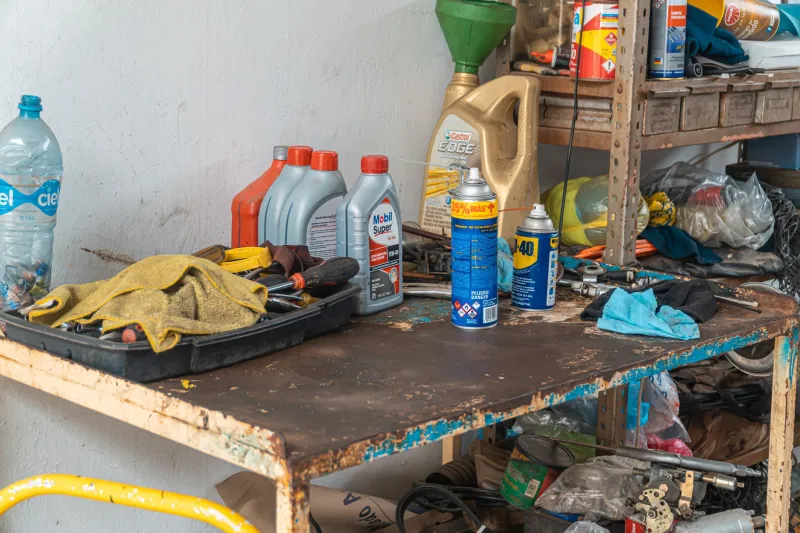
A small selection of top-up fluids can save you from a breakdown or, worse, engine damage. You don't need to carry a full litre of everything — small top-up bottles are fine and take up far less space.
- Engine oil – Check your handbook for the correct grade. Even a minor oil leak can become a serious problem if you're not carrying a top-up.
- Coolant/antifreeze – Particularly relevant in winter, but coolant levels can drop year-round. A small pre-mixed bottle is ideal.
- Screen wash – Yes, it seems obvious. But running out in a muddy British winter when a lorry has just sprayed your windscreen is genuinely dangerous. Keep a spare litre.
- Brake fluid – You probably won't need this often, but if your brake pedal suddenly feels spongy, having the right fluid on hand gives you options.
Store fluids upright in a sealed bag or a small plastic crate to avoid leaks contaminating the rest of your kit.
Tools That Actually Earn Their Space
You don't need to turn your boot into a mechanic's workshop. But a few well-chosen tools can be the difference between a five-minute fix and a two-hour wait for the AA.
Spare fuses – Modern cars blow fuses with surprising regularity. A small mixed fuse kit (blade fuses in a range of amperages) and a fuse puller cost almost nothing and take up almost no space. Worth it.
A decent torch – A head torch is better than a handheld one when you're trying to peer under a bonnet or change a wheel in the dark. Rechargeable ones are more reliable than battery-powered if you remember to charge them.
Duct tape and cable ties – The unglamorous heroes of roadside repairs. A loose trim panel, a flapping undertray, a temporary fix on a cracked hose — these two items have got drivers home more times than most people would admit.
A multi-bit screwdriver – Flathead and Phillips, at minimum. You'd be surprised how often a loose panel or trim piece needs nothing more than this.
Latex or nitrile gloves – Because crawling around under your car in your work clothes isn't fun, and neither is trying to get oil off your hands with a petrol station paper towel.
The Comfort Extras Worth Adding
Beyond the mechanical stuff, a few extra items can make a roadside stop far less miserable — especially in Britain, where the weather tends to have its own ideas.
Microfibre cloths – Useful for everything from wiping down a dipstick to cleaning a foggy windscreen from the inside. Keep a few clean ones in a zip-lock bag.
A hi-vis vest – If you're ever out of the car on a motorway hard shoulder, you're legally required to wear one in many EU countries, and it's just plain sensible anywhere. Keep one per person if you regularly carry passengers.
A basic first aid kit – A compact one designed for vehicles is compact enough to tuck under a seat. It won't replace professional medical help, but it handles cuts, burns, and minor injuries until you can get to a chemist or A&E.
A phone charging cable and car adapter – Because a dead phone when you're broken down in the middle of nowhere is a genuinely awful situation. Keep a spare cable in the glovebox.
Know When to Call for Help
Carrying the right kit doesn't mean attempting repairs that are beyond your skill level. Topping up fluids, changing a fuse, inflating a tyre — these are reasonable DIY tasks for most drivers. But if you're dealing with a suspected brake failure, a warning light you don't recognise, or anything that feels structurally wrong with the car, put your hi-vis on, get away from the vehicle if it's safe to do so, and call your breakdown provider.
Roadside assistance exists for a reason, and there's no shame in using it. The kit in your boot is there to handle the minor stuff and keep you safer while you wait — not to replace a trained mechanic.
Storing It All Properly
A loose jack rattling around the boot is a hazard in itself. Use a small plastic storage crate with a lid, a dedicated car organiser bag, or even a canvas tool roll to keep everything tidy and accessible. Heavier items should sit flat and low. Fluids should be sealed and upright. Check the kit every six months — test the torch, check fluid expiry dates, make sure the jump starter is charged.
It takes twenty minutes twice a year. And when you're the one on the hard shoulder at dusk, watching other cars fly past, you'll be very glad you did it.