Stranded but Sorted: What Solo Drivers Should Really Have in Their Car
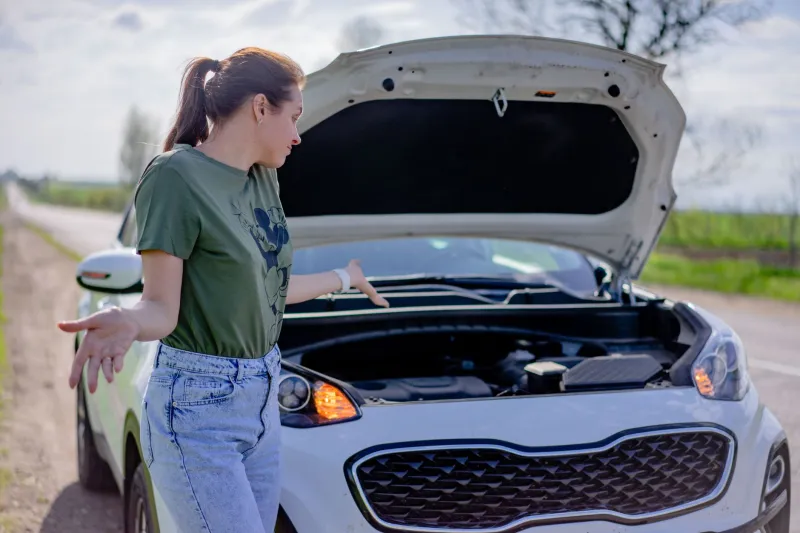
It's half nine on a Tuesday evening. You're on an unlit stretch of the A-road somewhere between where you were and where you're going. The car's made a noise it shouldn't have, and now it's not moving. Your phone has one bar of signal. There are no other cars.
This is the scenario nobody plans for — and that's exactly the problem. Traditional breakdown advice covers the mechanical basics well enough: carry a warning triangle, keep a hi-vis vest in the car, have your breakdown provider's number saved. All sensible. But for solo drivers — particularly women travelling alone, younger motorists, or anyone who regularly drives through rural or remote parts of the UK — the conversation needs to go further.
Being stranded isn't just a mechanical problem. It's a safety situation, a communication challenge, and a test of how well-prepared you actually are.
Start With the Basics (Because They Still Matter)
Before we get into the less conventional kit, the foundations are worth reinforcing. A proper breakdown kit should include:
- A quality jump starter pack — modern lithium-ion versions are compact, reliable, and don't require another vehicle to work. Non-negotiable.
- A tyre inflation kit or portable compressor — slow punctures are far more common than full blowouts, and being able to inflate a tyre enough to reach a safe stopping point can make a significant difference.
- A warning triangle and LED road flares — the flares especially. They're visible in rain and fog in a way that a static triangle isn't, and they're safer to deploy on fast roads.
- A hi-vis vest — keep it in the cabin, not the boot. If you break down and need to exit the vehicle, you need it immediately.
- A torch with fresh batteries or a rechargeable head torch — hands-free lighting is far more practical when you're trying to assess a problem under the bonnet.
If you don't have these, start here. Everything else builds on this foundation.
The Communication Gap
Here's where solo drivers often fall short. Mobile signal in the UK is patchy in ways that consistently catch people out — rural Wales, the Scottish Highlands, large parts of Cornwall and Cumbria, and plenty of motorway stretches in between. A single bar of 4G that disappears the moment you try to make a call is a genuinely stressful situation.
A few things help:
A portable power bank — large capacity, ideally 20,000mAh or above. Keeping your phone charged when you're waiting for assistance could take hours is essential. Some people carry two.
A personal GPS tracker or satellite communicator — devices like the Garmin inReach Mini allow two-way messaging via satellite, entirely independent of mobile networks. They're not cheap, but for anyone who regularly travels through remote areas alone, they're a serious piece of kit. Some also have an SOS function that connects directly to emergency services.
A physical note of key contacts — breakdown provider membership number, an emergency contact, your vehicle registration. Written down. On paper. In your glove box. If your phone dies or is damaged, you want this information accessible.
Knowing what to say to 999 — if you're on a motorway, look for the nearest marker post (small orange markers on the verge with a number and direction arrow). These give emergency services your precise location far more accurately than a postcode or GPS coordinate.
Personal Safety: The Conversation We Should Have More Often
This section is practical, not alarmist. The vast majority of people who stop to help a stranded driver are doing exactly that — helping. But solo drivers, particularly women, have legitimate reasons to think about how they manage a roadside situation.
Stay in the vehicle where possible — on motorways and dual carriageways especially, exiting the car is the greater danger. Lock the doors, put your hazard lights on, and wait for recovery from inside.
A personal alarm — compact, loud, and inexpensive. Clip one to your keys or keep it in the door pocket. It's a deterrent and a signalling device if you need to attract attention safely.
A window breaker and seatbelt cutter — if you're in an accident rather than a breakdown, these can be critical. Combined tools are available for a few pounds and should be within arm's reach of the driver's seat, not buried in the boot.
Trust your instincts — if someone stops and their behaviour makes you uncomfortable, you are under no obligation to get out of the car or engage. You can speak through a partially opened window, or not at all. Calling 999 and describing your situation is always an option.
The Psychological Preparation
Kit alone doesn't give you confidence — knowing how to use it does. Spend ten minutes familiarising yourself with your jump starter pack before you need it. Know how to connect the terminals. Know where your spare tyre is (if you have one) and whether you've ever changed a tyre before. Know your breakdown provider's app or number from memory.
Mental rehearsal sounds excessive, but it works. Thinking through 'what would I do if...' scenarios when you're calm and at home means you're not doing it for the first time in the dark on the hard shoulder.
Also worth considering: let someone know your route when you're travelling alone on long or unfamiliar journeys. A simple message — 'heading to Edinburgh, should arrive by 7' — gives someone a reference point if they don't hear from you.
Building Your Kit Without Spending a Fortune
You don't need to buy everything at once. If you're starting from scratch, prioritise:
- Jump starter pack
- Power bank (large capacity)
- Head torch
- Hi-vis vest and LED road flares
- Personal alarm
- Window breaker/seatbelt cutter
- Written emergency information card
From there, add a portable tyre compressor, a first aid kit, and — if your driving habits take you off the beaten track — a satellite communicator.
The goal isn't to turn your boot into a survival depot. It's to reach a point where, if something goes wrong, you have options. Because having options — practical, accessible, ready-to-use options — is what genuine roadside confidence actually feels like.