Inside Out: The Seasonal Interior Reset Every British Driver Should Be Doing
There's a particular kind of denial that sets in when you've been driving the same car for a few years. You stop noticing the faint smell of last November's muddy boots, the grey film creeping up the door cards, or the way the fabric seats have taken on a kind of permanent dampness that never quite dries out. It's gradual. And then one day you give someone a lift and suddenly see your own interior through fresh eyes.
The UK does not make it easy. Between the wet winters, the salt-laden roads, the school run chaos, and the general tendency of British weather to follow you inside, car interiors here take a proper beating. A seasonal deep clean isn't vanity — it's maintenance. And done right, it protects your investment, keeps long journeys far more pleasant, and removes a surprising number of hidden health hazards.
Here's how to actually do it, rather than just shuffling things around with a vacuum.
Why 'A Quick Hoover' Isn't Enough
The average vacuum tackles visible debris — crumbs, grit, pet hair if you're lucky. What it doesn't touch is the embedded dirt in fabric fibres, the mould spores working their way into foam seat padding, the salt residue from winter roads that's been tracked in on shoes and slowly corroding your carpet backing, or the dust collecting in every vent, crevice, and under-seat gap you've never once looked at.
In Britain specifically, the combination of cold mornings, wet footwear, and condensation-heavy cabins creates ideal conditions for mould and mildew — especially in older cars or those parked outside year-round. That musty smell isn't character. It's a sign that moisture has found somewhere to live and settle in.
A seasonal reset — ideally four times a year, or at minimum autumn and spring — addresses all of this systematically.
Start with a Full Strip-Out
Remove everything. Floor mats, boot liners, any loose storage, the change you've been meaning to fish out from under the passenger seat for six months. Get it all out. This is the step most people skip, and it's the one that makes the biggest difference.
Shake out and beat the mats before hosing them down. Rubber mats can take a proper scrub with a stiff brush and some diluted all-purpose cleaner. Fabric mats need a bit more care — a carpet cleaner spray, worked in with a brush, then rinsed and left to dry fully before going back in. Never put damp mats back in the car. That's how mould starts.
Tackling Fabric Seats and Carpets
For fabric upholstery, a foam-based upholstery cleaner is your best friend. Apply it, work it in with a soft brush in circular motions, then extract with a clean microfibre cloth. For anything deeply ingrained — the remains of a takeaway, mud from a hiking trip, the mystery stain from three summers ago — you may need a second pass.
Once clean, consider applying a fabric protector spray. Products like Scotchgard or automotive-specific equivalents create a barrier that resists liquid and makes future spills far easier to deal with. It's a five-minute job that pays off every time someone climbs in with a coffee.
Leather seats need their own approach. A proper leather cleaner removes grime without stripping the natural oils, followed by a conditioner to keep the material supple. British winters are particularly harsh on leather — the constant heating and cooling causes it to dry and crack over time if it's not being conditioned regularly.
The Hidden Dust Traps
Vents are one of the most overlooked spots in any interior clean. Dust, pollen, and general airborne grime build up in the fins and get recirculated every time you run the blower. A small detailing brush — or even an old paintbrush — works through the slats far better than any cloth.
Door pockets, the gap between seats and centre console, the underside of seat runners, and the boot hinge area are all places that collect grime invisibly. A detailing brush paired with a vacuum attachment makes short work of most of these. For the really awkward spots, foam-tipped detailing swabs (the kind used in camera cleaning kits) are surprisingly effective.
Don't forget the headlining. It rarely gets touched, but over time it absorbs odours and collects a fine film of dust. A very lightly dampened microfibre cloth — not wet, just barely damp — wiped gently across it makes a noticeable difference.
Mould Prevention in Damp Weather
If you've ever opened your car on a cold morning to find the windows completely fogged and a faint damp smell hanging in the air, you'll know that British weather and car interiors have a complicated relationship.
Moisture gets trapped in carpet fibres, under mats, and in seat foam. Once mould takes hold, it's genuinely difficult to shift — and it's not great for air quality either. Prevention is far easier than cure.
After a deep clean, leave the windows cracked slightly whenever the car is parked safely and weather permits. Moisture-absorbing products — small hanging dehumidifier bags or the reusable silica gel packs — placed in the footwells or boot make a real difference over winter months. Replace or recharge them regularly and they'll quietly deal with ambient humidity before it becomes a problem.
If you do find mould, a diluted white vinegar solution applied with a cloth and left to dry in sunlight (on a rare British sunny day) can help. For anything more established, an automotive mould remover product is worth the investment.
Salt Residue and Winter Recovery
Spring is the time to be thorough. Roads are salted heavily throughout winter, and that salt comes inside on boots, bags, and everything else. It's corrosive to carpet backing, seat rail mechanisms, and any exposed metal components beneath the seats.
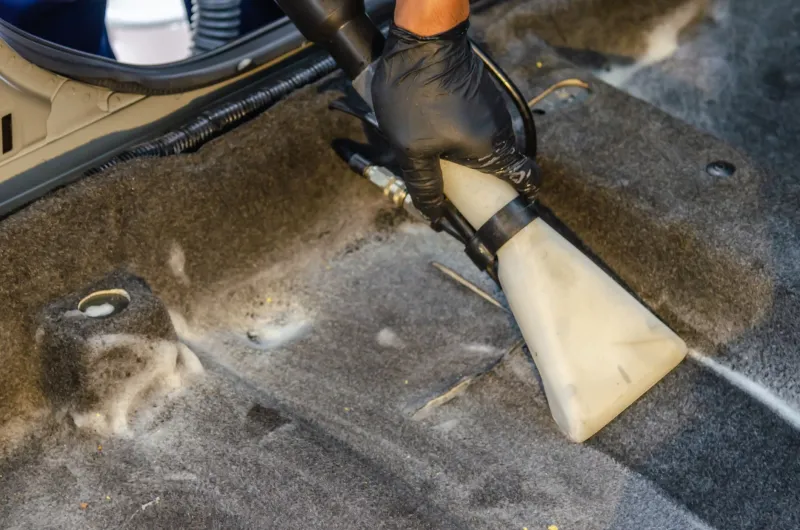
A proper carpet extraction clean in spring — either using a hired machine or a professional valet — removes the salt that vacuuming simply can't. It's one job worth doing properly once a year rather than skimping on.
Finish with Fragrance — the Right Way
Air fresheners that just mask smells are a short-term fix. If you've done a proper clean, you shouldn't need them. But for a finishing touch, an odour-eliminating spray (rather than a masking fragrance) neutralises any remaining staleness. Vent clips and interior sprays that use activated charcoal or enzyme-based formulas tend to outperform the novelty tree hanging from the mirror.
A clean interior isn't just about appearances. It's about making time in your car — whether that's a daily commute or a weekend adventure — genuinely more pleasant. And given how much time British drivers spend behind the wheel, that's well worth an afternoon's effort every few months.