Up Top and Locked Down: The No-Nonsense Guide to Roof Racks and Cargo Carriers
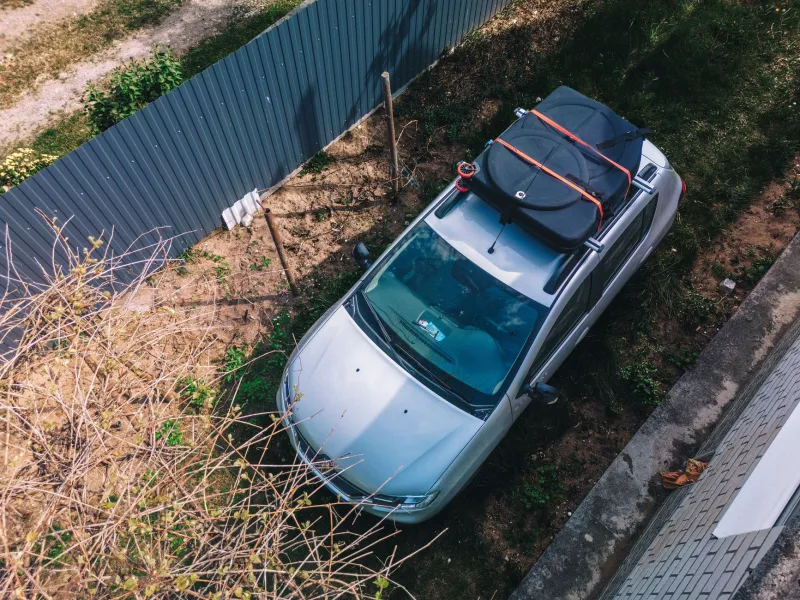
There's something deeply satisfying about a well-loaded roof rack. Bikes secured, boards strapped, bags lashed, everything in its place before a big trip. But there's also something deeply unsettling about watching a poorly secured cargo box wobble at 60mph on the M6, or hearing the kind of wind noise that makes conversation in the car physically impossible.
Getting your roof setup right isn't complicated, but it does require a bit of thought — particularly for UK drivers who might be loading up for a Snowdonia mountain bike weekend one month and a Scottish ski trip the next. Here's how to do it properly.
Choosing the Right System for Your Vehicle
Start with your vehicle's roof type. Most modern cars fall into one of four categories: bare roof (no rails or fixing points), flush rails (rails that sit flat against the roof), raised rails (rails that stand proud of the roofline), and fixed points (small mounting points hidden under rubber plugs). Each requires a different foot pack to attach a crossbar system.
Thule and Yakima are the two dominant names in this space, and for good reason — their fit systems are extensively tested, their load ratings are clearly stated, and their customer support is genuinely useful if you're unsure which kit fits your specific make and model. Both brands offer online vehicle fit guides that will tell you exactly which foot pack, bar, and accessory combination works for your car.
Don't be tempted to buy a generic rack from a discount site to save money. A crossbar system that isn't properly rated for your roof's fixing points is a liability, not a bargain. The cost of a quality system is modest compared to the cost of an incident caused by equipment failure.
Load Ratings and Weight Distribution
Every vehicle has a dynamic roof load rating — the maximum weight it can carry while moving. This figure accounts for the forces exerted by acceleration, braking, and cornering, and it's almost always lower than you'd expect. Many family hatchbacks are rated at just 75kg, which sounds generous until you're loading two bikes, a roof box, and a bag of camping gear.
Check your vehicle handbook before you start loading. Then add up the weight of the rack itself, the cargo carrier or box, and everything going inside it. Subtract the rack weight from the vehicle's rating to find your actual usable load capacity.
Weight distribution matters as much as total weight. Keep heavier items towards the front of the roof (closer to the windscreen) to reduce the lever effect on the rear fixing points, and centre loads left-to-right to avoid affecting your vehicle's handling balance. This is especially important on longer motorway runs and in crosswind conditions — something UK drivers are all too familiar with on exposed routes like the A66 across the Pennines or the A82 through Glencoe.
Securing Your Load: Straps, Locks, and Sense
Ratchet straps are stronger than cam buckle straps and better suited to heavier items like bikes and kayaks. However, they can generate high point loads if overtightened — always use protective pads or rubber buffers between the strap and your equipment to prevent damage.
For cargo boxes, make sure the mounting clamps are fully engaged on both crossbars before loading anything inside. Open the box and check the clamp engagement from the inside — it's the only reliable way to confirm a proper fit. Once loaded, shake the box firmly before setting off. If it moves, the clamps aren't tight enough.
Locks are worth fitting even for short trips. Thule and Yakima both offer lockable crossbar systems and lockable cargo box latches. A locked roof box is both a theft deterrent and a safety feature — it can't be blown open at speed, which is a more common occurrence with cheaper unlocked boxes than manufacturers like to admit.
Wind Noise: The Thing Nobody Warns You About
A bare crossbar set at highway speed generates a tonal hum that oscillates between annoying and maddening depending on your speed and the gap between the bars. Most quality crossbars now feature aerodynamic profiles that significantly reduce this effect — Thule's WingBar and Yakima's JetStream are both genuinely quieter than round or square-section alternatives.
A cargo box also affects wind noise, but usually in a different way — cheaper boxes create turbulence and flutter rather than tonal noise. A well-fitted, aerodynamic box from a reputable brand is often quieter than a bare rack at speed, because it smooths airflow over the roof rather than interrupting it.
If you're running a bare rack without a box — for bikes, boards, or skis — a wind fairing fitted to the leading edge of the front crossbar makes a noticeable difference. They're inexpensive and typically clip onto the bar without tools.
Fuel Efficiency: Expect a Hit, Plan Accordingly
There's no sugarcoating this: a roof rack increases aerodynamic drag, and that costs fuel. A bare crossbar set typically adds around five to eight percent to fuel consumption at motorway speeds. A loaded cargo box can push that figure to fifteen percent or more, depending on the box size and how fully loaded it is.
On a long trip — say, London to Inverness — that's a meaningful difference in fuel spend. Plan your stops accordingly and don't assume the range estimate your car's trip computer gives you with an empty roof will hold true with a loaded box on top.
Remove the rack when you're not using it. This is the single most effective thing you can do to restore your fuel economy between trips, and it also reduces wear on the roof fixing points over time.
Common Problems and How to Fix Them
The rack is creaking. Check all torque bolts and clamp fixings — a creak almost always indicates something that's slightly loose rather than fully tight. Re-torque to the manufacturer's specification and re-check after the first fifty miles.
The cargo box won't seal properly. Inspect the rubber seal around the lid for damage or debris. Clean it with a mild soap solution and apply a silicone-based rubber conditioner to keep it supple. A failed seal lets in water and creates significant additional noise.
The bikes are swaying at speed. Rear-wheel stabiliser arms on bike carriers prevent this — if your carrier doesn't have them, add a ratchet strap between the two bike frames as a temporary measure. Proper stabilisers are a worthwhile upgrade for regular use.
The whole setup vibrates at a specific speed. This is resonance — the natural frequency of the loaded system matching a road frequency. Adjusting the spacing between crossbars by a few centimetres usually shifts the resonant frequency outside your normal speed range.
A good roof setup is an investment in the kind of trips that make driving worthwhile. Get it right once, look after it properly, and it'll serve you across years of adventures — from the Cotswolds to the Cairngorms and everywhere in between.