Where You Put Your Phone in the Car Matters More Than You'd Think
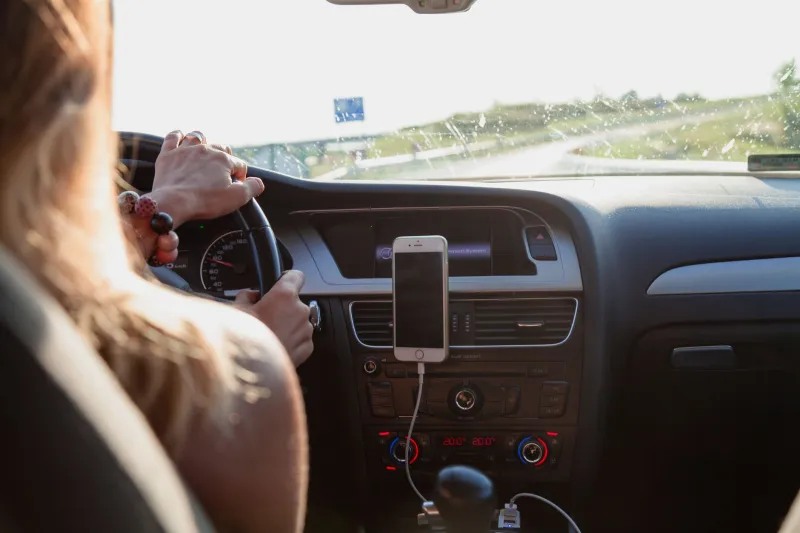
Every driver has their own system. Some balance the phone on the dashboard. Others prop it in a cupholder, or tuck it behind the gear stick, or — and this one still happens — hold it in their hand. None of these are particularly good ideas, and one of them is illegal.
The humble phone mount might seem like a minor accessory, but getting it wrong creates real problems: distraction, neck strain, blocked sightlines, and on the wrong kind of road, a phone that ends up in the footwell at the worst possible moment. Getting it right, on the other hand, is one of those small improvements that quietly makes every journey better.
The Legal Bit, Out of the Way
Using a handheld mobile while driving in the UK carries a £200 fine and six penalty points — enough to wipe out a new driver's licence entirely. Since 2022, the law was tightened to cover any use of a handheld phone, including scrolling, taking photos, or checking notifications, even while stationary in traffic.
A properly mounted phone used for navigation or music control (without touching it while moving) is legal. But the mount needs to be positioned so it doesn't obstruct your view of the road — which rules out a lot of the cheap suction-cup jobs stuck slap in the middle of the windscreen.
Types of Mount: What's Actually Out There
The market is crowded, and the quality varies enormously. Here's a breakdown of the main options:
Windscreen suction mounts are the most common and the most variable in quality. A good one — with a strong vacuum seal and a locking mechanism — will hold firm on motorways and bumpy B-roads alike. A cheap one will drop your phone onto the dashboard at the most inconvenient moment, usually mid-roundabout. Look for mounts with gel suction cups and a secondary locking lever.
Air vent mounts clip onto the slats of your climate control vents. They're tidy, keep the phone at eye level, and don't obstruct the windscreen. The downside is that they can block airflow and, on cheaper models, the clip can loosen over time — particularly in summer when plastic expands in the heat. They're not ideal if you regularly use your vents for heating or demisting.
CD slot mounts are a solid option if your car still has a CD player (yes, some of us do). They're remarkably stable, don't interfere with the windscreen, and sit at a natural viewing angle. Increasingly niche, but worth knowing about.
Wireless charging mounts combine phone holding with Qi charging, which is genuinely useful on longer trips. The better versions have adjustable arms that grip the phone automatically when you insert it, and release when you press a button. They do tend to be bulkier, and cheaper models can run warm — worth checking reviews before buying.
Magnetic mounts use a small metal plate attached to the phone (or inside a case) and a magnetic base on the mount. They're quick to use — one-handed placement — and look clean. The concern some drivers have is whether the magnet affects phone hardware; modern phones are generally fine, but it's worth checking if you use a card wallet on the back of your case.
Dashboard adhesive mounts stick directly to the dash using a strong adhesive pad. They're very stable and position the phone low in your eyeline, which suits some drivers. The downside is permanence — removing them often damages the dashboard surface.
Position Is Everything
Whatever mount type you go with, where you put it matters as much as what it is. The general principle is that you want the phone within your natural field of vision — close enough that a glance is all it takes, not a head turn.
For most drivers, that means somewhere near the centre of the dashboard or on the lower portion of the windscreen, aligned roughly with the instrument cluster. Placing it too high on the windscreen forces you to look up and away from the road. Too low, and you're constantly dipping your eyes well below the horizon.
On UK roads specifically — particularly narrower A-roads and rural lanes — you need your peripheral vision working for you. A phone positioned to the far left or right of the dashboard effectively creates a blind spot. It's worth spending five minutes adjusting the position before you commit to a spot.
Integrating with Your Existing Setup
If you're already running a dash cam, think about how your phone mount interacts with it. The two shouldn't compete for the same patch of windscreen real estate, and ideally they shouldn't overlap in their fields of view. A dash cam mounted at the top centre of the windscreen and a phone mount positioned lower and slightly to the left tends to work well for most setups.
For drivers using Android Auto or Apple CarPlay, a wired connection to the head unit is often a better solution than a standalone mount — it keeps the phone off the windscreen entirely and integrates navigation and audio through the car's own screen. If your car supports wireless CarPlay or Android Auto, a wireless charging mount in a sensible position is a tidy middle ground.
What to Look For When Buying
A few things worth checking before you add to basket:
- Grip strength and phone compatibility. Make sure the mount accommodates your phone size, especially if you're using a larger model or a chunky case.
- One-handed operation. You should be able to place and remove the phone without needing two hands or looking away from the road.
- Build quality. Rubber-coated arms, metal joints, and quality suction mechanisms all indicate something that'll last more than a few months.
- Vibration resistance. On British roads, this matters. Look for reviews that specifically mention stability on rough surfaces — a mount that's fine on a smooth motorway can rattle constantly on a potholed urban road.
The Upgrade That Earns Its Keep
A decent phone mount costs anywhere from £10 to £50 depending on the type and features. It's not the most glamorous purchase, but it's one of those things you notice every single time you drive — in a good way, when it's right, and in a deeply irritating way when it's not.
Get the position right, buy something that actually holds firm, and this is one of those small changes that makes daily driving noticeably less stressful. Which, on British roads, is never something to take for granted.